Irregular Heartbeat? Arrhythmia and Ablation Treatment in Ahmedabad
Catheter Ablation, Cardioversion, and Electrophysiology Restoring Your Heart's Normal Rhythm
An irregular heartbeat, medically
called an arrhythmia, is when the heart beats too fast, too slow, or with an
uneven rhythm. Some arrhythmias are harmless. Others significantly affect daily
life, and some carry a risk of serious complications if left untreated. Most
arrhythmias, including the most common one, atrial fibrillation, are very
treatable.
Atrial Fibrillation (AF)
AF is the most common significant
arrhythmia. The upper chambers of the heart fire chaotically instead of in an
organised rhythm, causing an irregular and often rapid heartbeat. Patients
describe it as palpitations, breathlessness, fatigue, or dizziness. Some people
have AF for years without knowing it.
AF is important to treat not just
for symptoms but because blood can pool in the fibrillating chambers and form
clots, raising the risk of stroke. Treatment typically involves rhythm or rate
control medication, anticoagulation, and, in many cases, catheter ablation to
restore normal rhythm.
Other Common Arrhythmias
•
AFL Atrial Flutter:
similar to AF but more organised; responds very well to ablation
•
SVT Supraventricular
Tachycardia: sudden episodes of rapid heartbeat that start and stop abruptly;
catheter ablation can cure SVT in the majority of cases
•
VT Ventricular
Tachycardia: originates in the lower chambers; can cause blackouts; requires
prompt evaluation
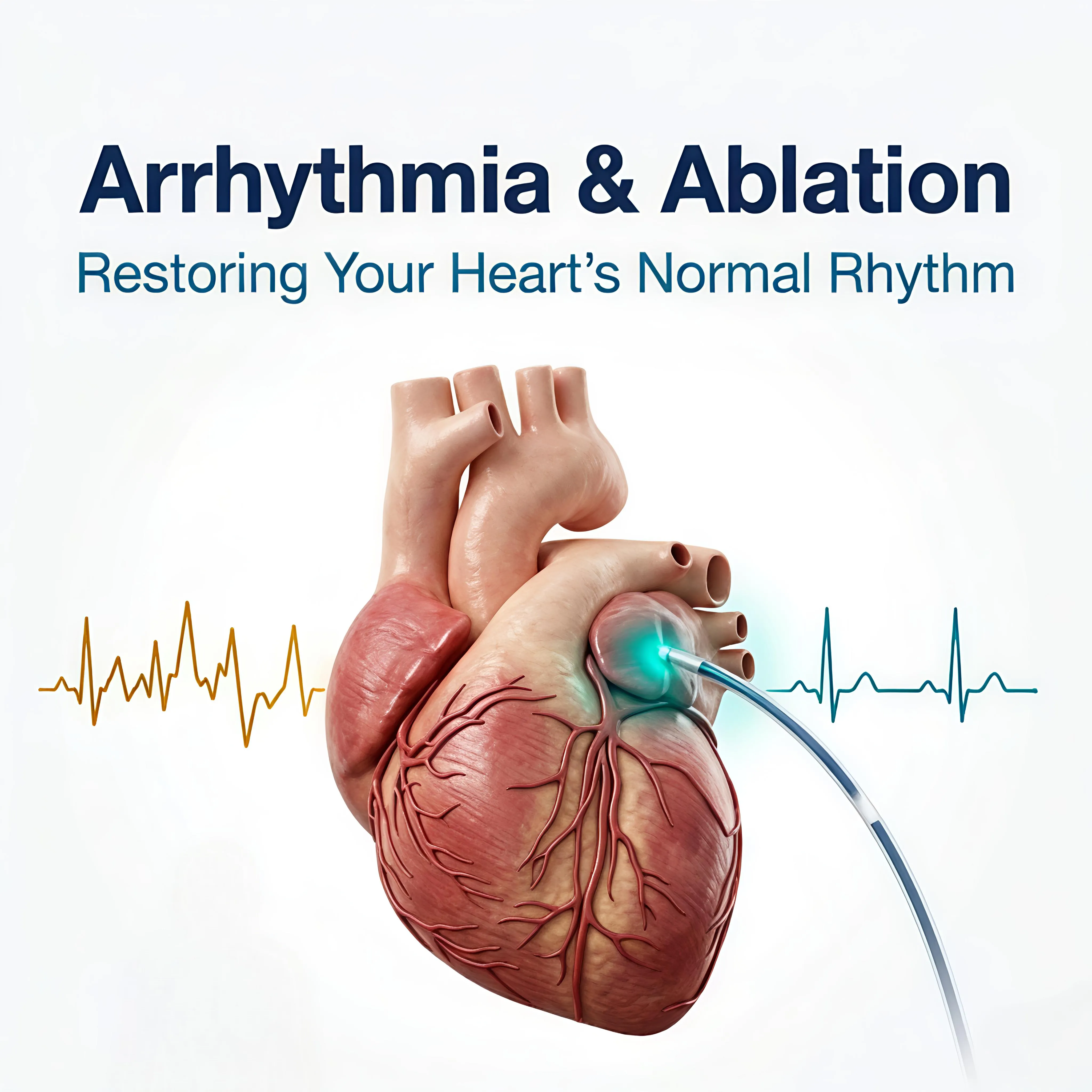
What Is Catheter Ablation?
Catheter ablation uses thin
flexible tubes guided to the heart, typically through the veins in the groin, to locate and target the exact area responsible for the abnormal rhythm. That
area is treated with radiofrequency energy (heat) or cryotherapy (cold) to
eliminate the faulty electrical pathway.
Most ablation procedures are done
under sedation. No open heart surgery. Most patients are mobile the next
morning and back to their normal routine within a few days, back to work,
walking regularly, and managing daily activities as before.
Cardioversion: Resetting the Rhythm
In some patients with AF or
flutter, a controlled electrical shock under brief sedation called DC
cardioversion is used to reset the heart to a normal rhythm. It takes only a
few minutes, and most patients go home the same day.