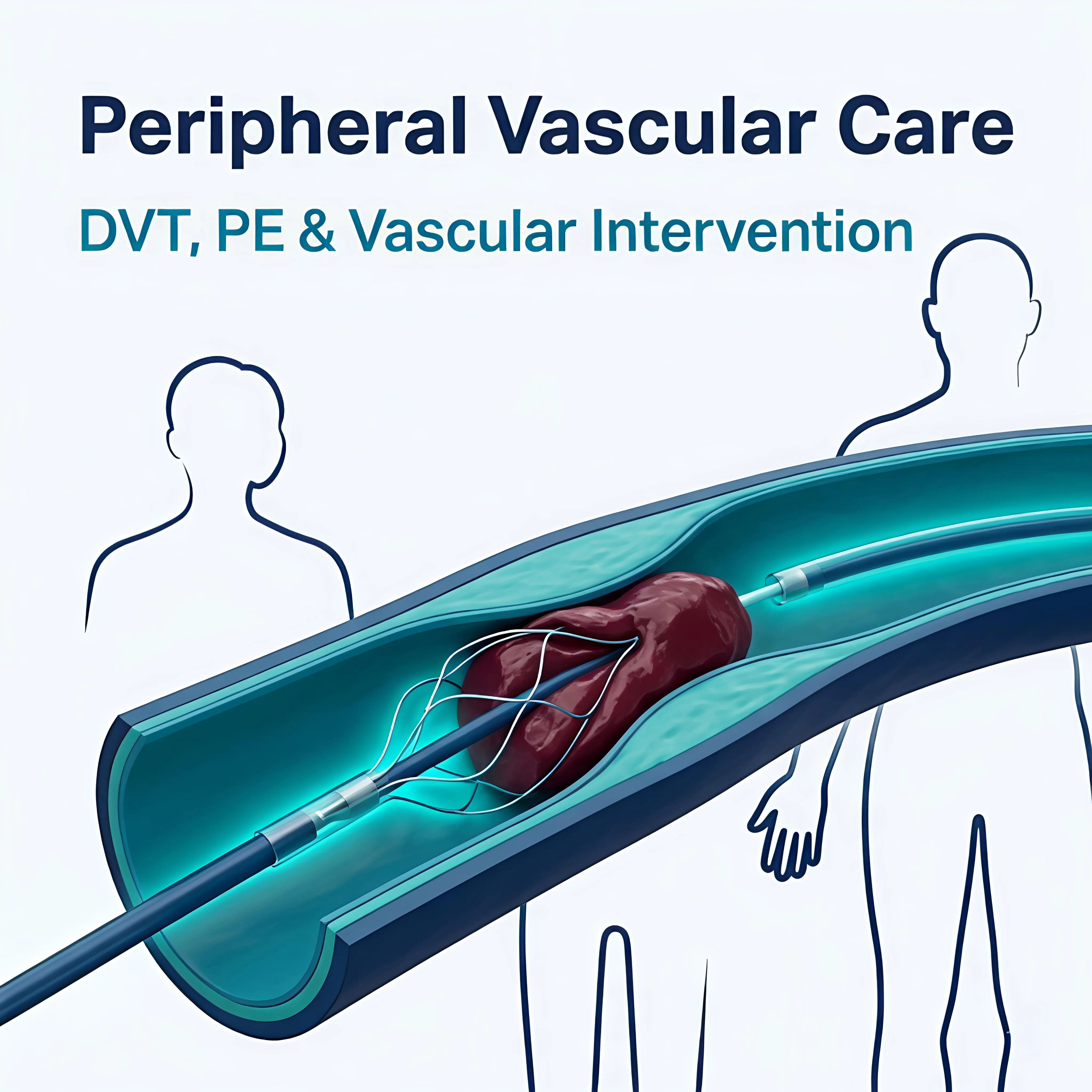
Peripheral Vascular and Endovascular Care at Apollo CVHF, Ahmedabad
DVT, Pulmonary Embolism, PAD, Carotid and Renal Artery Disease Expert Vascular Intervention
The same disease processes that
affect the coronary arteries can affect blood vessels throughout the body in
the legs, the lungs, the carotid arteries supplying the brain, and the kidneys.Apollo CVHF offers specialist peripheral vascular and endovascular care
alongside its cardiac programme.
Conditions We Treat
•
DVT : Deep Vein Thrombosis:
a blood clot in the veins of the leg. Urgent treatment is needed to prevent the
clot from travelling to the lungs. Our team uses advanced mechanical
thrombectomy devices, including the Inari device, ClotTriever, FlowTriever, and
Indigo Penumbra systems.
•
PE : Pulmonary Embolism: a
clot that has travelled to the lungs. A potentially life-threatening emergency
treated with catheter-directed techniques and thrombectomy.
•
PAD: Peripheral Artery
Disease: narrowing of the arteries supplying the legs, causing cramping pain on
walking that eases with rest. Treated with angioplasty and stenting of the leg
arteries.
•
Carotid Artery Disease:
narrowing of the arteries supplying the brain; a significant cause of stroke.
Carotid stenting is a catheter-based treatment.
•
Renal Artery Disease:
narrowing of the arteries supplying the kidneys, contributing to
difficult-to-control hypertension.
Advanced Thrombectomy
For large blood clots in the veins
or lungs, our vascular team uses advanced mechanical thrombectomy systems to
physically remove the clot through a catheter. This can produce rapid clinical
improvement in breathlessness, pain, and swelling, often within hours.
|
If
you have a sudden swollen, painful leg or sudden breathlessness with chest
pain, call us immediately. These can be signs of a vascular emergency. +91
7096 800 800 |