
Diabetes and Your Heart: Understanding the Connection
If You Have Diabetes, Your Heart Is at Higher Risk. Here Is What
to Do About It.
Diabetes and heart disease are so
closely linked that doctors sometimes describe diabetes as a heart condition
that also affects blood sugar. People with diabetes are significantly more
likely to develop coronary artery disease, and when they do, it tends to be more
extensive, more silent, and diagnosed later than in non-diabetics.
Why Does Diabetes Damage the Heart?
Persistent high blood sugar
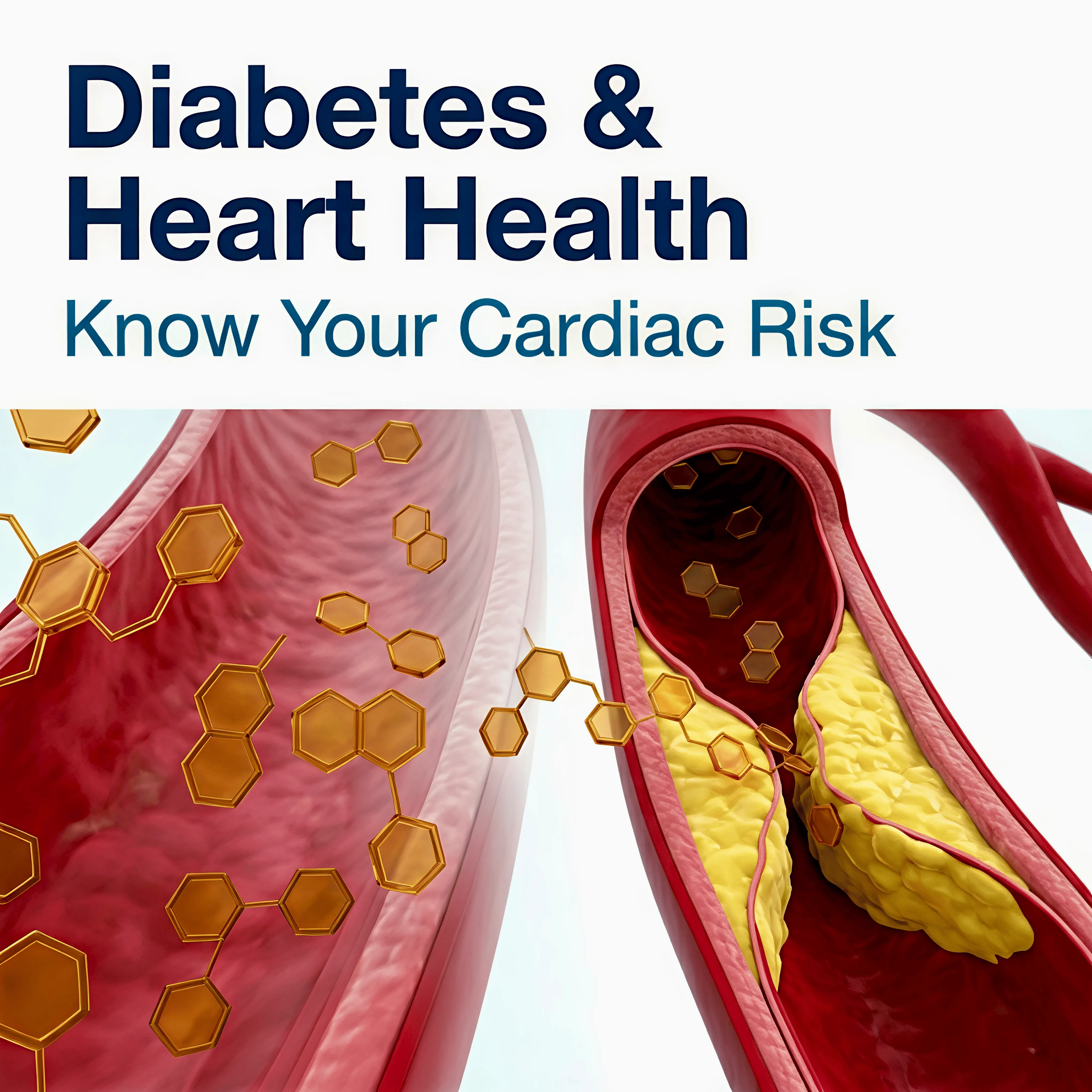
damages blood vessel walls throughout the body, accelerating the build-up of
plaques in the coronary arteries. Diabetes also alters fat metabolism, promotes
inflammation, and impairs the blood's normal clotting balance, all of which
contribute to faster and more widespread coronary artery disease.
The Risk Is Often Underestimated
•
People with diabetes are
significantly more likely to develop cardiovascular disease
•
Heart disease in diabetes
often progresses without the typical warning sign of chest pain
•
Diabetic patients often
have multiple arteries affected simultaneously
•
Silent ischaemia, reduced
blood flow without symptoms, is more common in diabetics
•
The combination of
diabetes, hypertension, and high cholesterol multiplies cardiac risk
substantially
What Should Diabetic Patients Do?
Every patient with diabetes should
have their cardiac risk assessed properly not just blood sugar monitoring.
This includes blood pressure, lipid profile, kidney function, and an ECG as a
minimum.
CT coronary angiography is
particularly valuable for diabetic patients it can detect coronary artery
disease before symptoms develop. For patients who have had diabetes for 10 or
more years, who are over 45, or who have additional risk factors, a CT CAG
provides a clear picture of what is happening in the coronary arteries before a
heart attack occurs.
Blood sugar management alone is
not enough. Blood pressure, cholesterol, weight, and lifestyle all need active
management. The reduction in cardiac risk from addressing all of these together
is far greater than managing blood sugar alone.