Pacemakers, ICDs, and Cardiac Devices Helping Your Heart Keep Its Rhythm
When Your Heart Needs Help: Keeping Pace with Modern Device Therapy
Explained Simply
Your heart beats around a hundred thousand times every day, driven by a precise electrical system that keeps every beat coordinated and on time. When that system develops a problem, whether the heart is beating too slowly, too fast, or with a disorganised rhythm a small implantable device can take over the job of keeping things running properly. For most patients, the procedure is simpler and the recovery faster than they expect.
What Is
a Pacemaker?
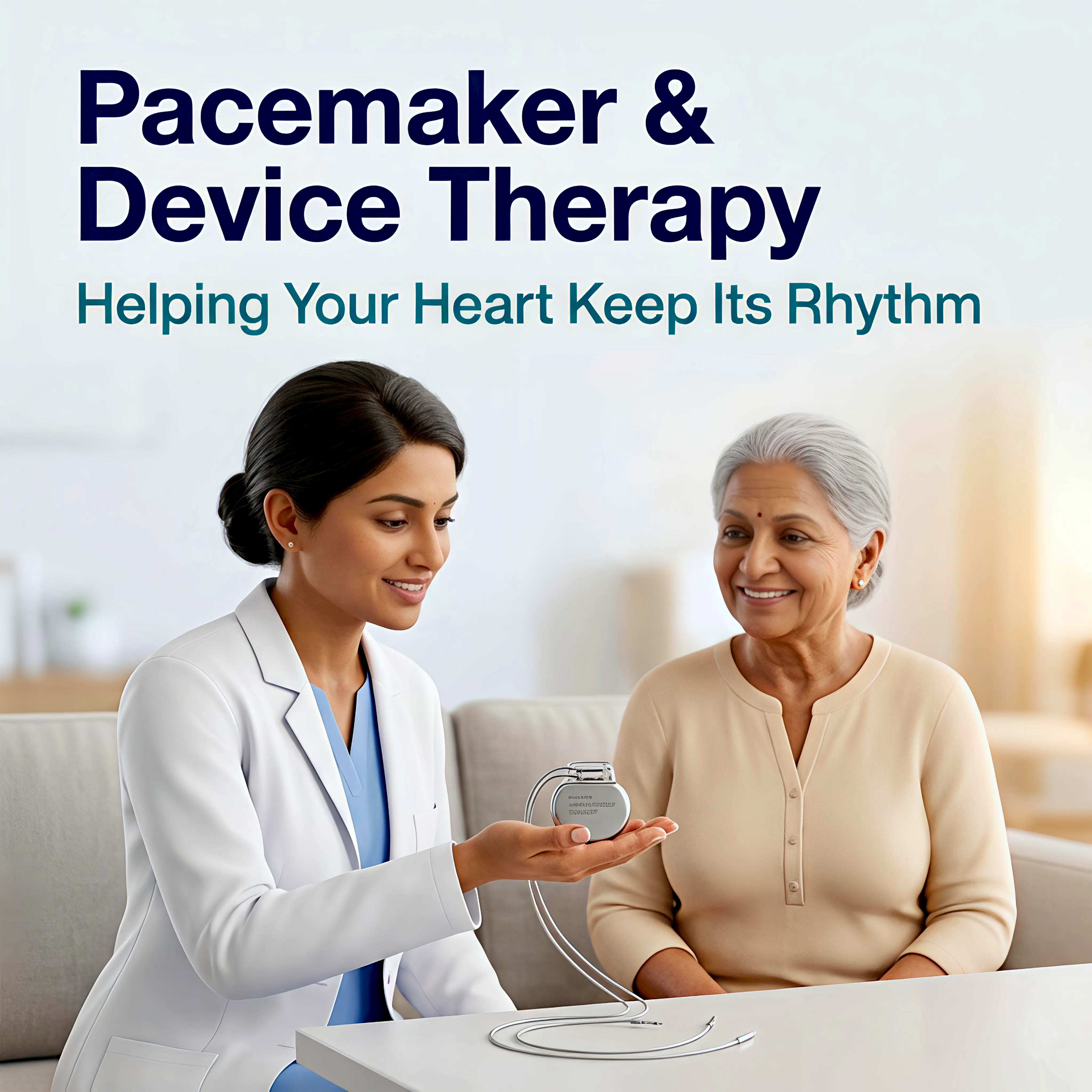
A pacemaker is a small device roughly the size of a large coin implanted just below the collarbone under
local anaesthetic. It monitors the heart's rhythm continuously and sends a tiny
electrical signal to prompt the next beat whenever the heart slows too much or
pauses too long.
The procedure is typically done under local anaesthesia and mild sedation. No open-heart surgery is involved. Most patients spend one night in the hospital and go home the following day. Within a week or two, most patients are back to a normal routine.
Types of
Cardiac Devices
•
Single and dual-chamber pacemakers coordinate the upper and lower chambers for a more natural
heartbeat
•
ICD (Implantable
Cardioverter Defibrillator) does everything a pacemaker does, plus delivers a
controlled shock if a dangerous fast rhythm is detected
•
CRT-P (Cardiac
Resynchronisation Therapy) coordinates both sides of the heart
simultaneously, improving pumping efficiency in heart failure
• CRT-D combines CRT therapy with defibrillator capability
Will I
Feel the Device?
Most patients are barely aware of the device in everyday life. There is a small visible bulge under the skin at the implant site. The arm on that side is restricted for a few weeks while the leads settle. After that, most patients forget it is there until it quietly does its job.
Living
With a Cardiac Device
•
Modern devices are highly
resistant to interference from everyday electronics
•
Mobile phones, household
appliances, and computers are safe to use normally
•
Airport security and MRI
scans require a brief discussion with our team before any procedure
•
You will receive a device
card to carry at all times
•
Regular follow-up checks
monitor the device and battery life