Congenital Heart Disease Expert Diagnosis and Treatment at Apollo CVHF, Ahmedabad
ASD, VSD, Patent Ductus and Complex Congenital Conditions From
Diagnosis to Intervention
Congenital heart disease covers a wide range of conditions present from birth, from small holes in the heart that may close on their own, to complex structural abnormalities requiring specialised intervention. Apollo CVHF treats both children and adults with congenital heart conditions, including many adults who discover they have had a heart abnormality all their lives.
•
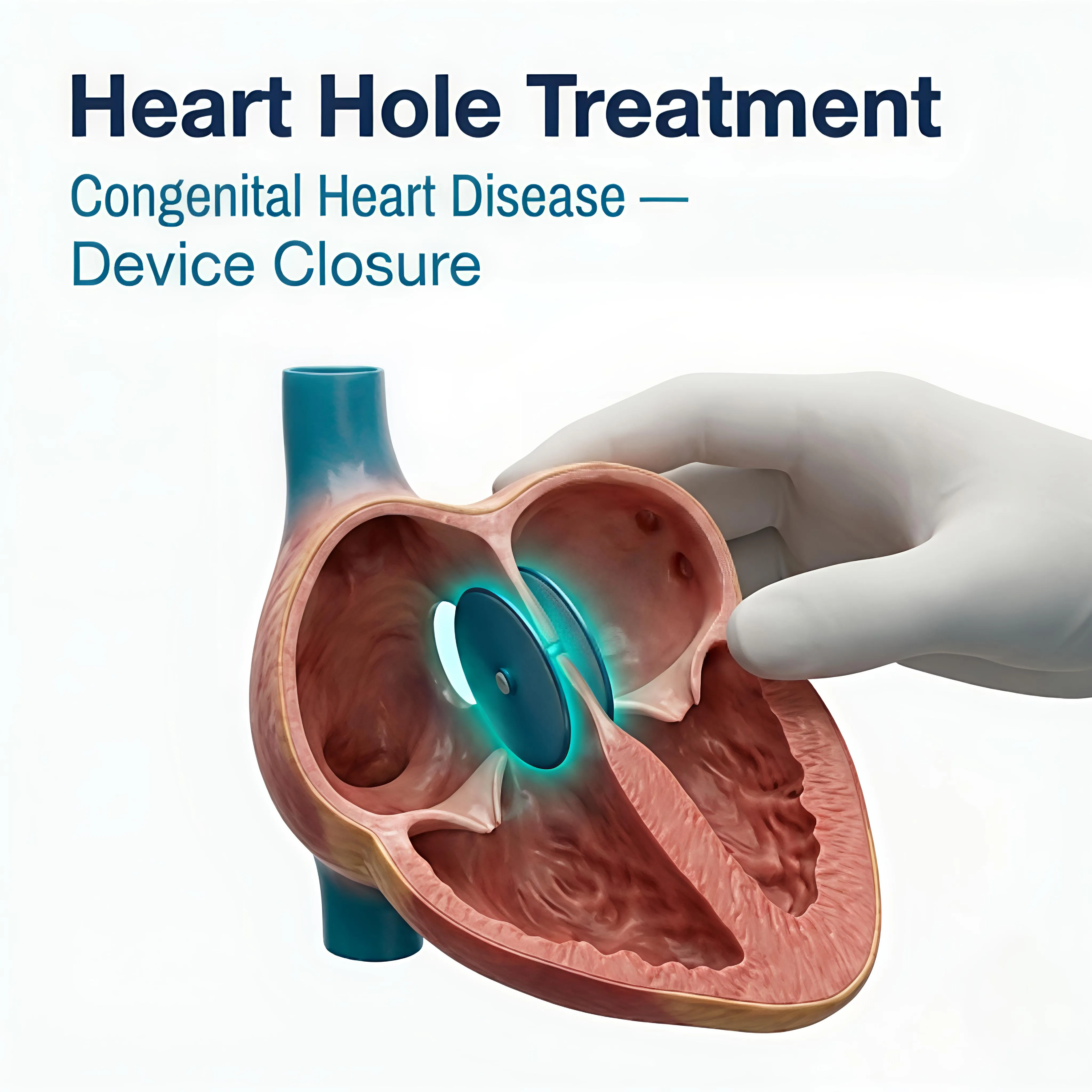
ASD Atrial Septal Defect:
a hole in the wall between the two upper chambers. Device closure via catheter
is possible in most cases no open surgery, typically home within a day or
two.
•
VSD Ventricular Septal
Defect: a hole in the wall between the two lower chambers. Many close
spontaneously in childhood; those that remain open may require catheter-based
device closure.
•
PDA Patent Ductus
Arteriosus: a blood vessel that should close after birth but remains open.
Device closure via catheter produces excellent results.
•
Pulmonary Valve Stenosis:
narrowing of the pulmonary valve, often treatable with balloon valvuloplasty , no surgery required.
Device Closure: What to Expect
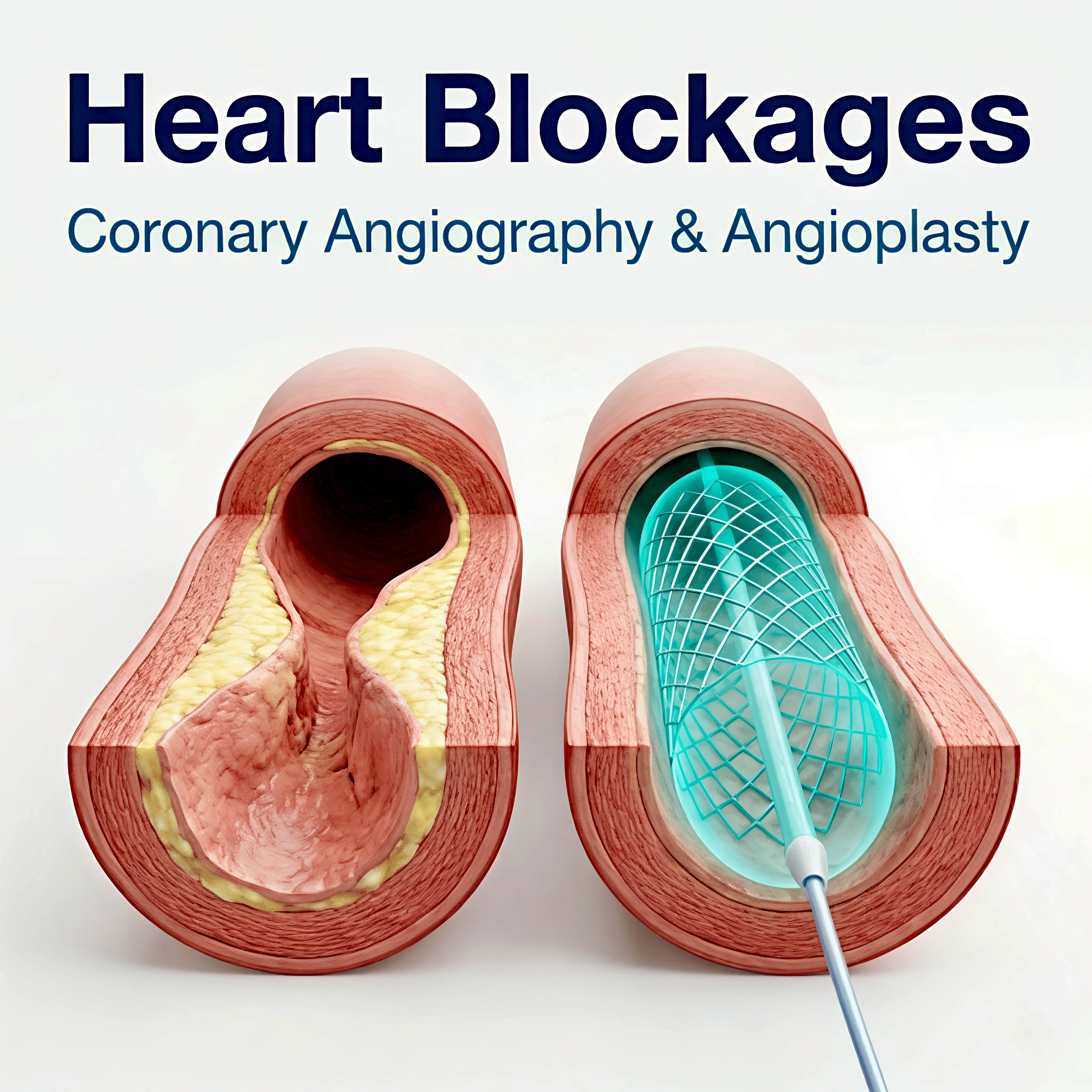
For ASD, VSD, and PDA that are
suitable for device closure, a thin catheter is guided from the groin vein to
the heart. A closure device is deployed under imaging guidance. Most device
closure procedures take 1–2 hours. Patients are typically in the hospital for one
to two nights and back to normal activity within a week.
Adults With Congenital Heart Disease
The majority of children born with
congenital heart disease now survive to adulthood. Many require ongoing
specialist follow-up, monitoring of repaired defects, and in some cases
re-intervention. If you were treated for a heart condition in childhood and
have not seen a specialist recently, an updated assessment is worthwhile.