Treadmill Test (TMT): How Your Heart Performs Under Pressure
A Simple, Effective Way to Detect Heart Disease Before Symptoms
Become Serious
Many heart conditions, including
significant coronary artery blockages, are invisible at rest. The heart copes
well enough when you are sitting down, but the moment you climb stairs, walk
briskly, or carry something, the demand for blood rises. If an artery is narrowed,
that extra demand cannot be met, and that is often when symptoms first appear.
The treadmill stress test is designed to reproduce that demand in a controlled,
monitored environment.
What Is the Treadmill Test?
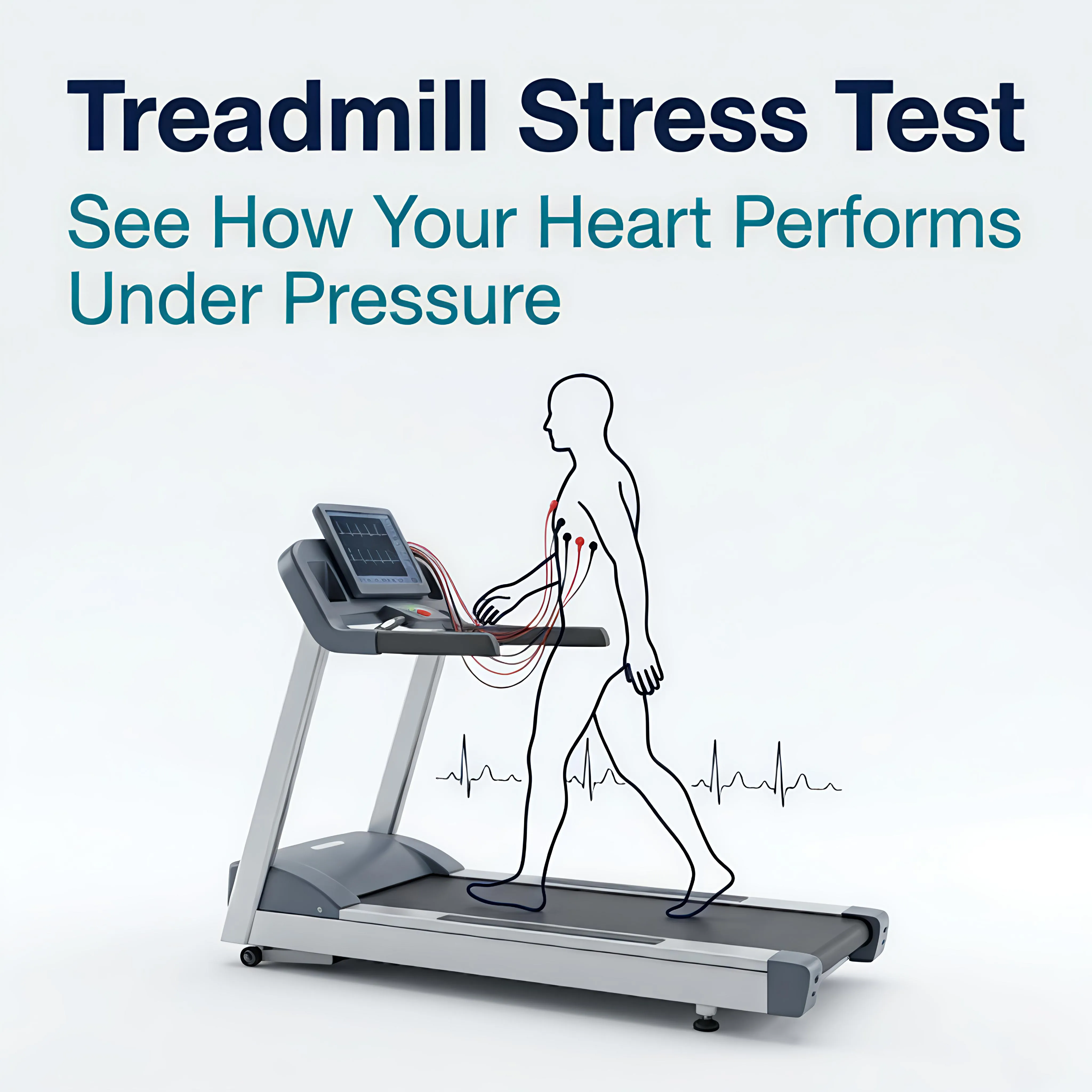
The TMT treadmill stress test or
exercise tolerance test (ETT) involves walking on a treadmill while your
heart rate, blood pressure, and ECG are continuously monitored. The speed and
incline of the treadmill are increased in stages, progressively raising the
demand on your heart. The test is stopped when you reach a target heart rate,
develop symptoms, or show changes on the ECG that indicate the heart is under
stress.
The test typically takes 15–30
minutes, including the preparation and recovery period. It is non-invasive, with no
needles beyond the ECG electrode stickers.
What Does the TMT Detect?
The TMT is primarily used to
assess for coronary artery disease, specifically, whether there are blockages
that reduce blood flow to the heart during exertion. It also provides
information about exercise capacity, blood pressure response, and heart rhythm
during activity.
•
Chest pain, breathlessness, or dizziness on exertion to establish whether symptoms are cardiac
•
Screening for coronary
artery disease in patients with risk factors
•
Assessment of fitness and
exercise capacity
•
Follow-up after angioplasty
or bypass surgery to check that blood flow has been restored
•
Pre-operative cardiac
assessment
What Should I Expect?
ECG electrodes are applied to your
chest and limbs. A blood pressure cuff is placed on your arm. You begin walking
on the treadmill at a comfortable pace, which gradually increases. The team
monitors your ECG and blood pressure continuously throughout.
After the test, you rest and are
monitored until your heart rate and ECG return to baseline. Results are
reviewed by a cardiologist and discussed with you the same day.
|
Wear
comfortable walking shoes and loose clothing. Do not eat a heavy meal for 3
hours before the test. Take your regular medications unless advised
otherwise. |