Bypass Surgery Through a Small Incision: Faster Recovery, Less Pain, Back Home Sooner
Minimally Invasive Cardiac Surgery (MICS) for Bypass - When Less
Incision Means More Recovery
The words 'bypass surgery' can be
frightening; the image most people carry is of a large chest incision, a long
time in intensive care, and months of recovery. MICS (Minimally Invasive
Cardiac Surgery) bypass surgery challenges that picture significantly. At
Apollo CVHF, our cardiac surgery team performs bypass surgery through a much
smaller incision, without the full splitting of the breastbone.
What Is Bypass Surgery?
Coronary artery bypass grafting
(CABG) creates new routes for blood to reach parts of the heart muscle starved
of supply due to blocked coronary arteries. A blood vessel, typically the
internal mammary artery or a vein from the leg, is used to bypass the blocked
section of artery.
Bypass surgery is recommended when
blockages are too extensive or complex for angioplasty, or in certain patient
groups, particularly diabetics with multi-vessel disease, where surgery
produces better long-term outcomes.
MICS Bypass vs Traditional Bypass
•
Traditional bypass requires
a full sternotomy the breastbone is cut along its entire length
•
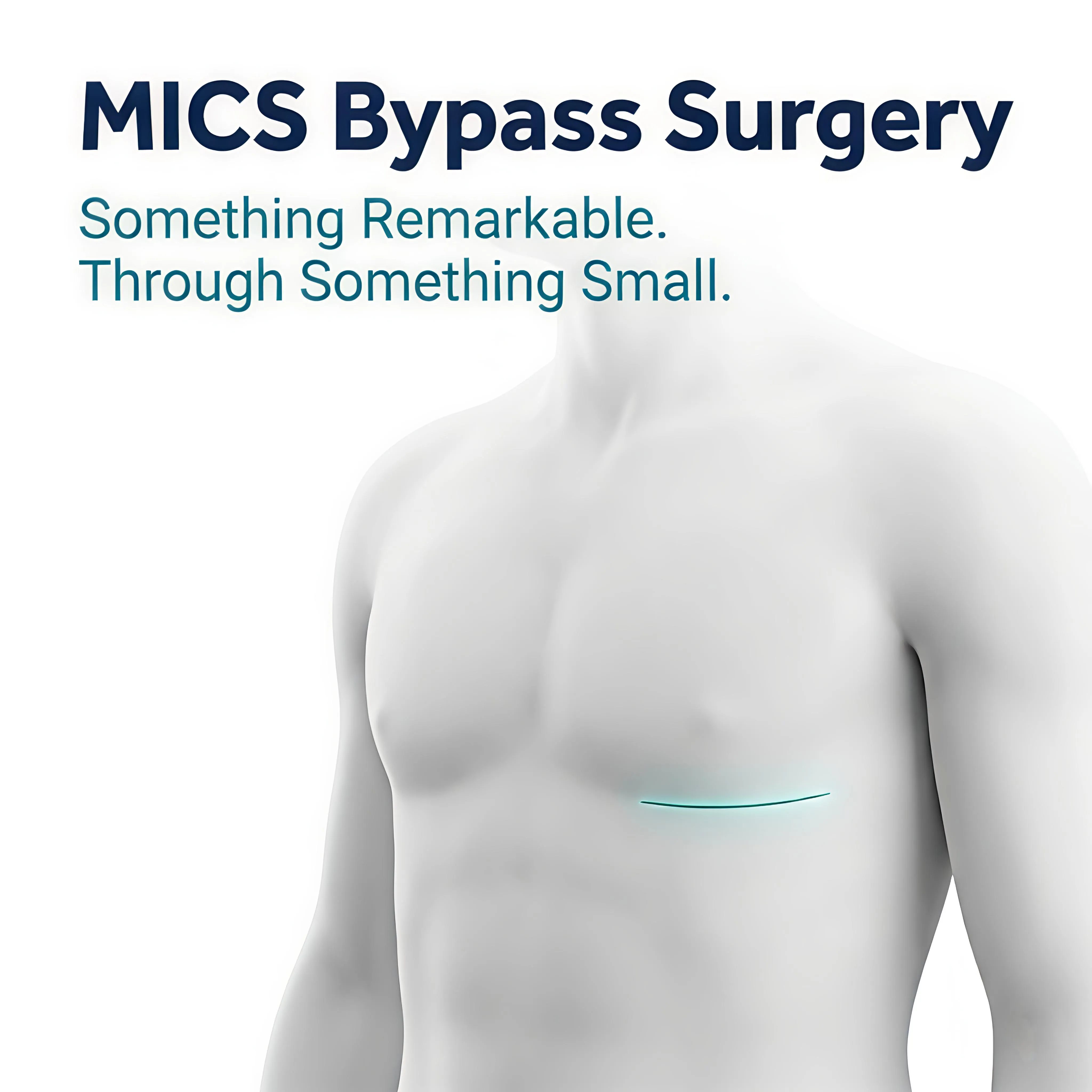
MICS bypass uses a smaller
incision and avoids the full division of the breastbone in many cases
•
Less surgical trauma means
less pain in the days after the operation
•
Most MICS bypass patients
are mobile within 24 hours and home within 4–5 days
•
Traditional bypass
typically means 5–7 days in the hospital and 6–8 weeks of full recovery
•
The scar from MICS surgery
is significantly smaller
Am I a Candidate for MICS Bypass?
Not every patient who needs bypass
surgery is a suitable candidate for the minimally invasive approach. Our
surgical team will review your angiography carefully and explain honestly
whether MICS is appropriate for your case. If it is not, conventional bypass
surgery remains a highly effective procedure and is performed to the same
standard at Apollo CVHF.