Heart Valve Replacement Without Open Heart Surgery: TAVI/TAVR at Apollo CVHF, Ahmedabad
TAVI: A Minimally Invasive Option for Valve Disease, Especially
for Older or High-Risk Patients
For decades, replacing a diseased
heart valve meant open heart surgery, stopping the heart, opening the chest,
and a recovery that could take months. For many patients, particularly older
ones or those with other medical conditions, that risk was simply too high.
TAVI changed everything.
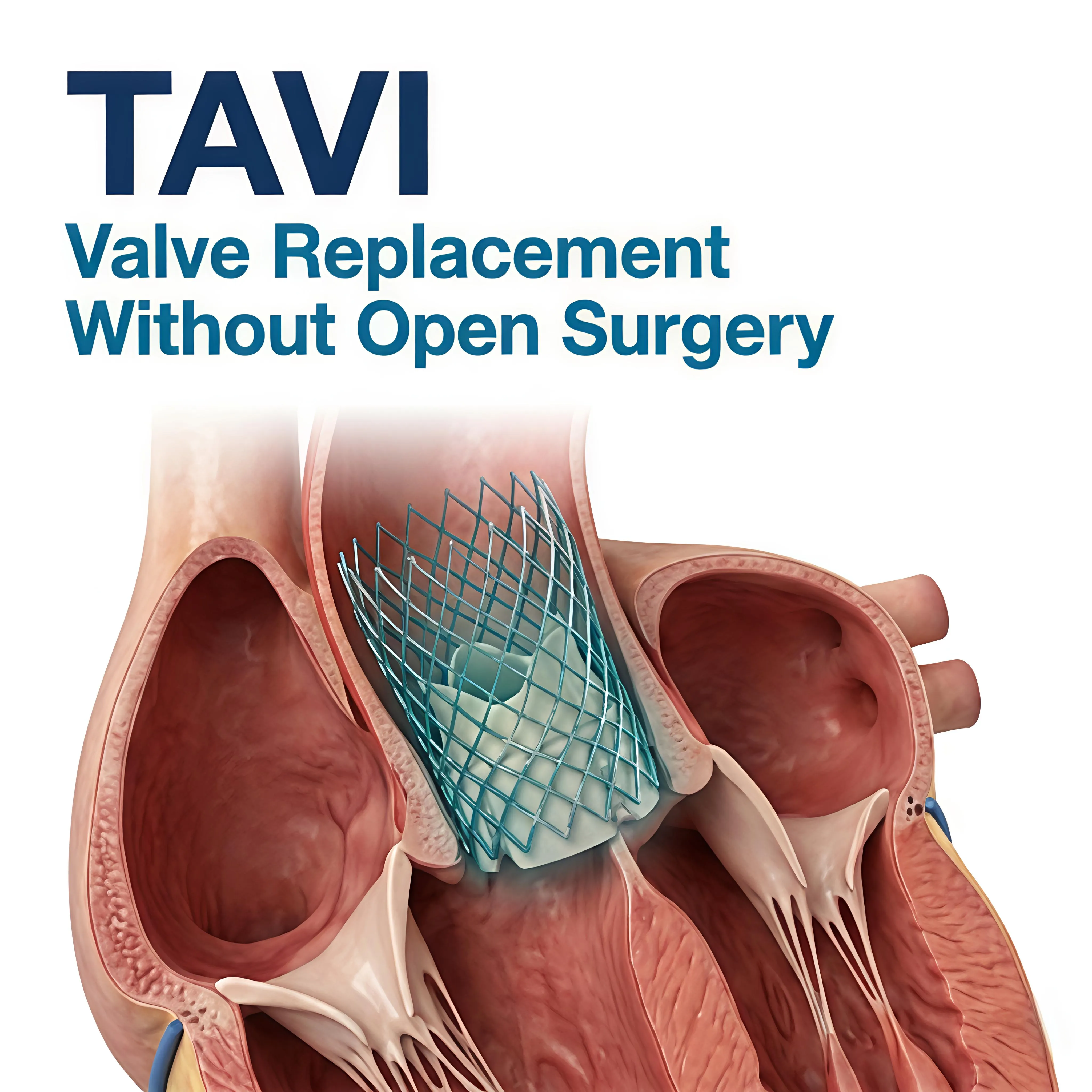
TAVI (Transcatheter Aortic Valve
Implantation) also known as TAVR (Transcatheter Aortic Valve Replacement) allows a new valve to be implanted inside the diseased one, without opening the
chest. Most patients are home within two to three days.
|
TAVI
and TAVR refer to the same procedure. 'Implantation' is the term used
in the UK and India; 'replacement' is more common in the US. They mean the
same thing. |
What Is Aortic Stenosis?
The aortic valve sits between the
heart and the main artery carrying blood to the body. Aortic stenosis is the
narrowing of this valve as calcium deposits build up on its leaflets over time,
preventing it from opening fully. The heart has to work harder and harder and
eventually starts to struggle.
Symptoms include breathlessness,
chest pain, sudden loss of consciousness and dizziness often first noticed during activity, and later even
at rest. Once symptoms appear, the condition can progress quickly. Valve
replacement restores normal flow and typically produces a meaningful
improvement in quality of life.
What Does the Procedure Involve?
A TAVI is performed in the
catheterization laboratory. A thin catheter is guided from the groin up through
the aorta to the heart. A new prosthetic valve compressed on a small balloon is delivered through the catheter and expanded precisely inside the old
diseased valve, pushing it aside and immediately taking over its function.
The procedure typically takes 1 to
2 hours. Most patients are awake with sedation general anaesthesia is not
required in many cases. Many patients describe feeling that their breathing has
become easier within hours.
Who Is TAVI Suitable For?
•
Patients with severe
symptomatic aortic stenosis.
•
Older patients for whom
open surgery carries an elevated risk.
•
Patients with other
significant medical conditions precluding major surgery.
•
Patients who want to avoid
the recovery burden of an open surgery.
• Patients who have had
previous heart surgery.