CT Coronary Angiography: Check Your Heart Arteries Without a Catheter
No Admission. No Catheter. Back to Your Day the Same Morning.
For years, the only way to see
inside the coronary arteries was to pass a catheter into the heart, an
invasive procedure requiring admission, sedation, and recovery time. CTcoronary angiography changed that. Today, we can produce detailed images of
your heart arteries in a single scan, without any catheter, without admission,
and in most cases, you are back home the same morning.
What Is CT Coronary Angiography?
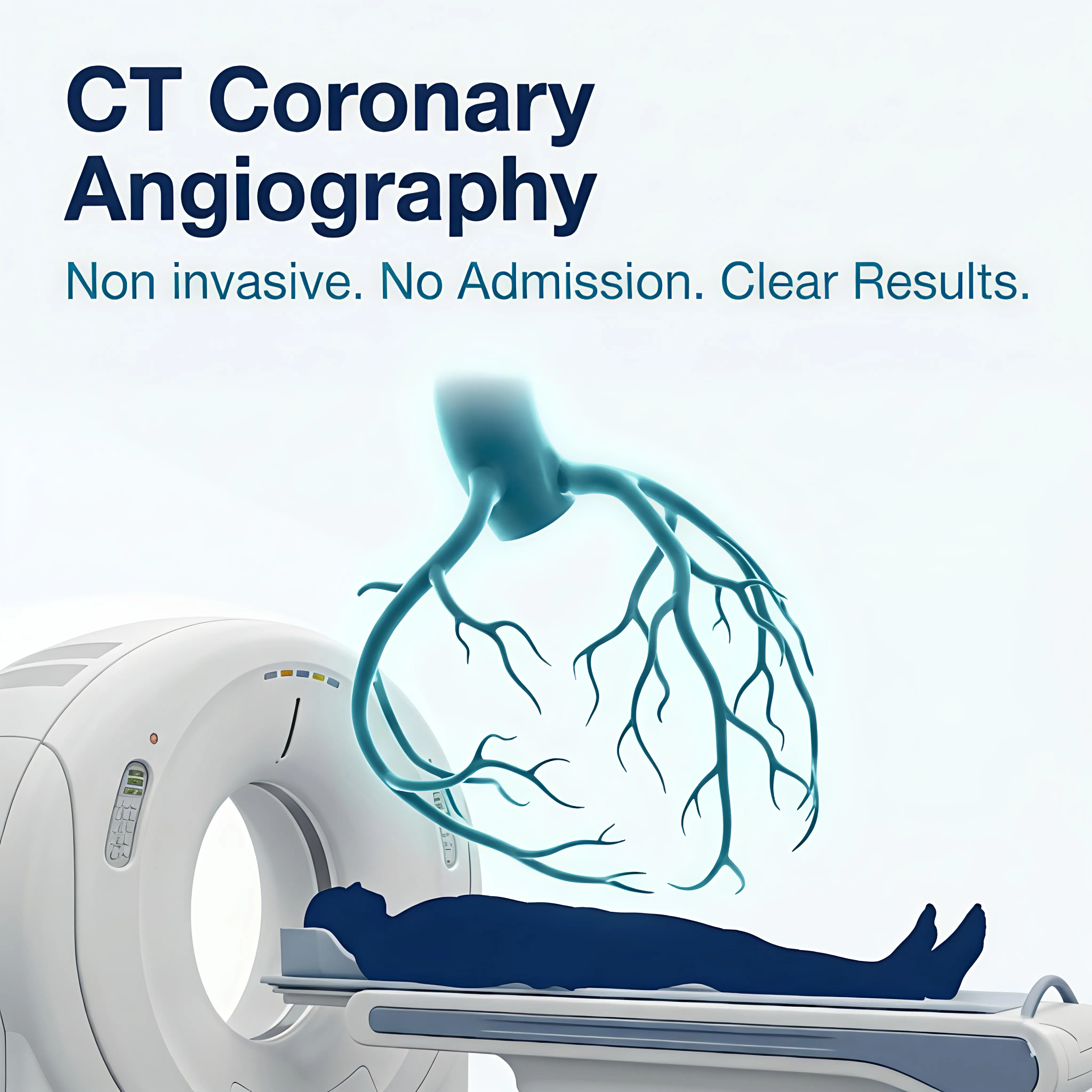
CT coronary angiography, also
called CT CAG or CTCA, uses a high-speed CT scanner and a contrast dye
injected through a small drip in your arm to produce detailed 3D images of the
coronary arteries. It can detect narrowing, blockages, calcium deposits, and
other abnormalities with high accuracy.
The scan itself takes only a few
minutes. You lie still on the scanner table, the contrast is injected, and the
machine captures the images. There is no tube going into your heart. No large
needle. No sedation required in most cases. Most patients describe it as far
less daunting than they expected.
How Is This Different From an Invasive Angiogram?
A conventional coronary angiogram
involves passing a catheter through the wrist or groin up to the heart, then
injecting dye directly into the coronary arteries while X-ray images are taken.
It is very accurate, but it is an invasive procedure with a small risk of
complications, and it requires admission and a recovery period.
CT CAG produces images of similar quality for many patients without any of the invasiveness. For patients who need clarification of a blockage or who have symptoms that may or may not be cardiac, it is often the right first investigation.
Who Should Consider a CT CAG?
·
Anyone with chest
pain or breathlessness that may be cardiac in origin
·
People with diabetes
who want to screen for silent heart disease
·
Patients with high
blood pressure and additional risk factors
·
Anyone with a strong
family history of heart attacks
·
Patients who have
been told they have a borderline blockage and want clarification
· Individuals who want a preventive heart check before any major life event
What Does the Scan Involve?
Most patients are back to normal
activity the same day. No bed rest, no restrictions. You can eat normally,
drive, and get on with your life while we review your results.
·
A small drip is
placed in your arm for the contrast injection
·
Your heart rate may
be gently lowered with medication for clearer images
·
You lie on the
scanner table, the scanner is open, not enclosed
·
The contrast is
injected, and the scan takes approximately 5-10 minutes
·
Results are reviewed
by our team, typically the same day