
Warning Signs of Heart Disease: Symptoms You Should Know
Heart disease is not one single condition. It includes
coronary artery disease, heart failure, abnormal heart rhythms, valve disease
and other conditions affecting the heart and blood vessels. The symptoms can
therefore vary considerably.
Some symptoms are relatively nonspecific, while
others—particularly new chest discomfort associated with breathlessness,
sweating, nausea or lightheadedness—can signal a medical emergency.
Recognising concerning symptoms can help you seek
appropriate care sooner. But it is equally important to understand that heart
disease can develop without obvious symptoms, particularly in its early
stages. Managing cardiovascular risk factors such as high blood pressure, high
LDL cholesterol, diabetes and smoking remains an important part of prevention.
When heart symptoms are an emergency
Seek emergency medical care immediately if you develop
new or severe chest discomfort, pressure or tightness, especially if it lasts
for several minutes, keeps returning, occurs at rest, or is accompanied by:
- Shortness
of breath
- Cold
sweating
- Nausea
or vomiting
- Lightheadedness
or fainting
- Pain
or discomfort spreading to the arm, shoulder, neck, jaw or back
- A
sudden or markedly irregular heartbeat
A heart attack does not always present as dramatic chest
pain. Chest discomfort may be accompanied by breathlessness, nausea, sweating,
dizziness or discomfort in other parts of the upper body. Current American
Heart Association and American College of Cardiology guidance recommends prompt
medical assessment of acute chest pain and equivalent symptoms.
If these symptoms are happening now, do not wait for a
routine cardiology appointment.
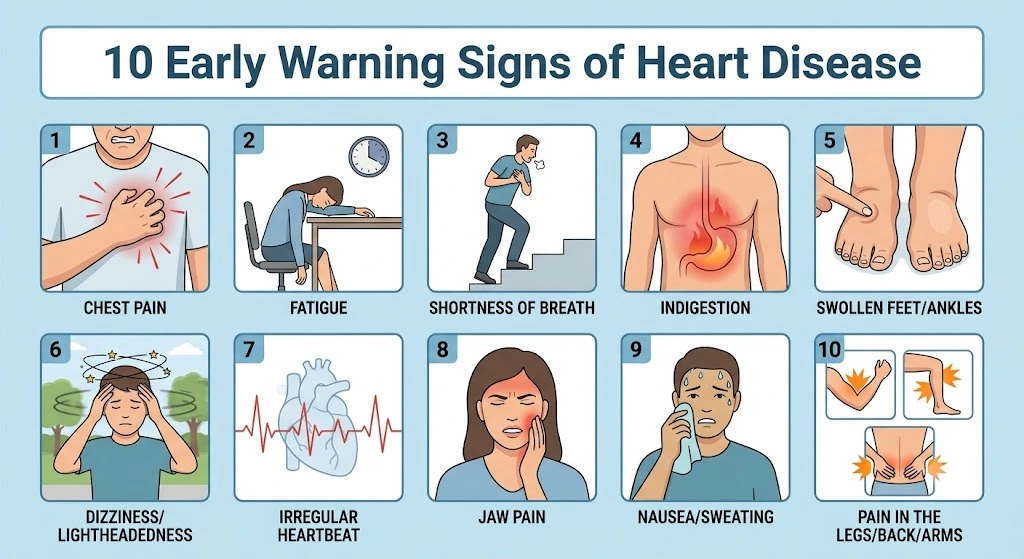
1. Chest pain, pressure or discomfort
Chest discomfort is one of the most important symptoms of
coronary artery disease and acute coronary syndrome.
Heart-related discomfort is often described as pressure,
heaviness, tightness, squeezing or an uncomfortable sensation in the centre or
left side of the chest. It may occur during physical exertion or emotional
stress and improve with rest. However, acute coronary syndrome can also cause
symptoms at rest.
Heart-related discomfort does not always remain in the
chest. It can be felt in the shoulder, arm, neck, jaw, back or upper abdomen.
Shortness of breath and fatigue can also accompany myocardial ischaemia.
Not every episode of chest pain is caused by the heart.
Muscle and rib problems, acid reflux, lung conditions and other causes are
common. The nature, duration, triggers, associated symptoms and cardiovascular
risk factors all help determine how concerning chest pain is.
If chest discomfort is new, unexplained or occurring with
the warning symptoms described above, it should be assessed urgently.
For more information, see Heart
Attack: Recognizing Symptoms and Emergency Treatment.
2. Shortness of breath
Breathlessness can be a symptom of several heart conditions,
including coronary artery disease and heart failure.
Some people notice breathlessness during activities that
previously felt easy—for example, walking uphill, climbing stairs or
exercising. In heart failure, breathlessness may also occur when lying flat or
wake a person from sleep.
Heart failure can cause fluid to accumulate in the lungs and
other parts of the body, making breathing more difficult. However,
breathlessness is not specific to heart disease. Lung disease, anaemia,
obesity, infection and other conditions can also cause it.
A new or progressively worsening reduction in exercise
tolerance deserves medical assessment, particularly when accompanied by
swelling of the legs, chest discomfort, palpitations or unusual fatigue.
Apollo CVHF's information on heart
failure symptoms and treatment provides further detail.
3. Unusual or persistent fatigue
Feeling tired after a demanding day is normal. Persistent or
disproportionate fatigue is different.
Fatigue can occur with heart failure and may also accompany
reduced blood flow to the heart. In heart failure, it is often accompanied by
reduced exercise capacity or breathlessness.
Unusual tiredness is particularly important when it
represents a clear change from your usual ability to perform everyday
activities.
Fatigue by itself does not mean that you have heart disease.
Sleep disorders, anaemia, thyroid disease, infections, medications,
psychological stress and many other conditions can cause similar symptoms.
In women experiencing acute coronary syndrome, unusual
tiredness or weakness can occur alongside more typical symptoms such as chest
discomfort, breathlessness, nausea or back discomfort. It should not, however,
be assumed that women having a heart attack will necessarily have different or
milder symptoms; chest discomfort remains the predominant symptom of myocardial
ischaemia in both men and women.
4. Pain or discomfort in the arm, shoulder, neck, jaw or
back
Heart-related discomfort can radiate beyond the chest.
Pain or pressure involving the arm, shoulder, neck, jaw or
upper back can occur with myocardial ischaemia, particularly when it occurs
together with chest discomfort, breathlessness, sweating or nausea.
These symptoms also have many non-cardiac causes. A painful
shoulder joint, cervical spine problem or muscle strain, for example, can
produce similar discomfort.
What matters is the overall pattern. New, unexplained
discomfort in these areas—particularly when associated with exertion or other
cardiac symptoms—should not simply be attributed to a musculoskeletal problem
without assessment.
5. Palpitations or an irregular heartbeat
Palpitations are the sensation of being aware of your
heartbeat. You may feel that the heart is racing, pounding, fluttering or
beating irregularly.
Palpitations can occur with arrhythmias such as atrial
fibrillation or other abnormal rhythms, but they are not always caused by a
heart disorder. Stress, caffeine, some medications, fever and occasional extra
beats can also cause palpitations.
The symptom deserves prompt medical assessment if it is
persistent, recurrent or associated with:
- Fainting
or near-fainting
- Chest
discomfort
- Breathlessness
- Marked
dizziness
- A
sustained very rapid or irregular heartbeat
An ECG and, when necessary, longer-term rhythm monitoring
can help identify an arrhythmia.
See Arrhythmia
and Ablation at Apollo CVHF for more information about abnormal heart
rhythms.
6. Swelling of the ankles, feet or legs
Swelling of both legs or ankles can occur when the body
retains fluid, including in some people with heart failure.
It becomes more concerning when swelling occurs together
with breathlessness, difficulty lying flat, reduced exercise tolerance,
abdominal swelling or unexpected weight gain from fluid retention.
However, leg swelling does not automatically mean heart
failure. Venous disease, kidney disease, liver disease, medications and several
other conditions can cause oedema.
A new or persistent swelling should therefore be evaluated
rather than assumed to be a circulation problem.
7. Sudden sweating
Cold or excessive sweating can accompany acute coronary
syndrome, particularly when it occurs together with chest discomfort,
breathlessness, nausea or lightheadedness.
Sweating on its own is not a specific sign of heart disease.
Heat, exercise, fever, anxiety, low blood sugar, medications and hormonal
changes can all cause increased sweating.
The combination of sweating with other acute cardiac
symptoms is much more important than sweating alone.
8. Dizziness, lightheadedness or fainting
Dizziness or lightheadedness can occur when an abnormal
heart rhythm, low blood pressure or another cardiovascular problem temporarily
reduces effective blood flow to the brain.
Fainting (syncope) can occasionally be caused by a
significant arrhythmia or structural heart problem and should not be dismissed,
particularly if it occurs during exercise or is associated with palpitations or
chest discomfort.
At the same time, dizziness is extremely nonspecific.
Dehydration, medications, low blood sugar, anaemia and inner-ear disorders are
among its many possible causes.
Dizziness or fainting accompanied by chest discomfort,
breathlessness or a sustained abnormal heartbeat warrants urgent medical
evaluation.
9. Persistent cough or wheezing
A persistent cough can occasionally occur in heart failure,
particularly when it is accompanied by breathlessness, difficulty lying flat or
swelling of the legs.
Heart failure can cause fluid congestion in and around the
lungs, which may lead to coughing or wheezing in some patients.
However, most persistent coughs are not caused by heart
disease. Respiratory infections, asthma, allergies, reflux and other conditions
are common causes.
Coughing up pink or frothy sputum together with significant
breathlessness can indicate acute pulmonary congestion and requires urgent
medical assessment.
10. Nausea, vomiting or indigestion-like discomfort
Nausea, vomiting and upper abdominal discomfort can
accompany myocardial ischaemia or acute coronary syndrome. Some people may
mistake these symptoms for indigestion or a stomach problem.
These symptoms deserve particular attention when they occur
with chest discomfort, breathlessness, sweating, lightheadedness or discomfort
in the arm, jaw, neck or back.
Nausea or indigestion by itself is much more commonly caused
by a gastrointestinal condition. The combination and timing of symptoms matter.
Can heart disease be present without symptoms?
Yes.
Some cardiovascular conditions can remain silent for years.
Coronary atherosclerosis, high blood pressure and several other cardiovascular
risk states may cause no obvious symptoms until the disease becomes more
advanced.
This is one reason cardiovascular prevention should not
depend solely on waiting for warning signs.
People with important risk factors—including diabetes, high
blood pressure, high LDL cholesterol, smoking, obesity, a strong family history
of premature cardiovascular disease or previously diagnosed vascular
disease—may benefit from an assessment of their overall cardiovascular risk
even when they feel well.
Apollo CVHF's Heart
Health Check Packages provide different levels of cardiovascular
assessment. The appropriate tests depend on the person's age, symptoms, risk
factors and clinical history; not everyone needs advanced cardiac imaging or
stress testing.
When should you see a cardiologist?
Arrange a medical assessment if you have:
- New
or unexplained chest discomfort
- Breathlessness
that is new or getting worse
- Recurrent
palpitations
- Unexplained
fainting or near-fainting
- Persistent
reduction in exercise tolerance
- New
swelling of the legs or ankles
- Symptoms
that repeatedly occur during physical activity
- Multiple
cardiovascular risk factors, even without symptoms
The appropriate evaluation depends on the presentation. It
may include a clinical examination, blood pressure measurement, ECG and
selected blood tests. Depending on the symptoms and clinical assessment,
further testing may include echocardiography, an exercise stress test, CT
coronary angiography or other investigations.
A treadmill test, for example, can assess symptoms, exercise
capacity, blood pressure response and ECG changes during exertion in
appropriately selected patients. Learn
about the Treadmill Test (TMT) at Apollo CVHF
CT coronary angiography provides non-invasive imaging of the
coronary arteries and may be appropriate for selected patients with suspected
coronary artery disease. It is not a test that every person with chest pain or
cardiovascular risk factors automatically needs. Learn
about CT Coronary Angiography at Apollo CVHF
How can you reduce your risk of heart disease?
Many cardiovascular risk factors can be identified and
treated before they lead to a major cardiac event.
Important measures include:
- Do
not smoke or use tobacco.
- Have
your blood pressure checked and treated when necessary.
- Know
your LDL cholesterol level and manage it according to your individual
cardiovascular risk.
- If
you have diabetes, maintain appropriate blood glucose control while also
addressing blood pressure, cholesterol, weight and other risk factors.
- Maintain
a healthy body weight and waist circumference.
- Exercise
regularly, according to your health and fitness level.
- Follow
a balanced dietary pattern rich in vegetables, fruits, whole grains,
legumes, nuts and other minimally processed foods.
- Limit
alcohol; avoiding it is appropriate for people who do not drink.
- Address
sleep, stress and other lifestyle factors that affect cardiovascular
health.
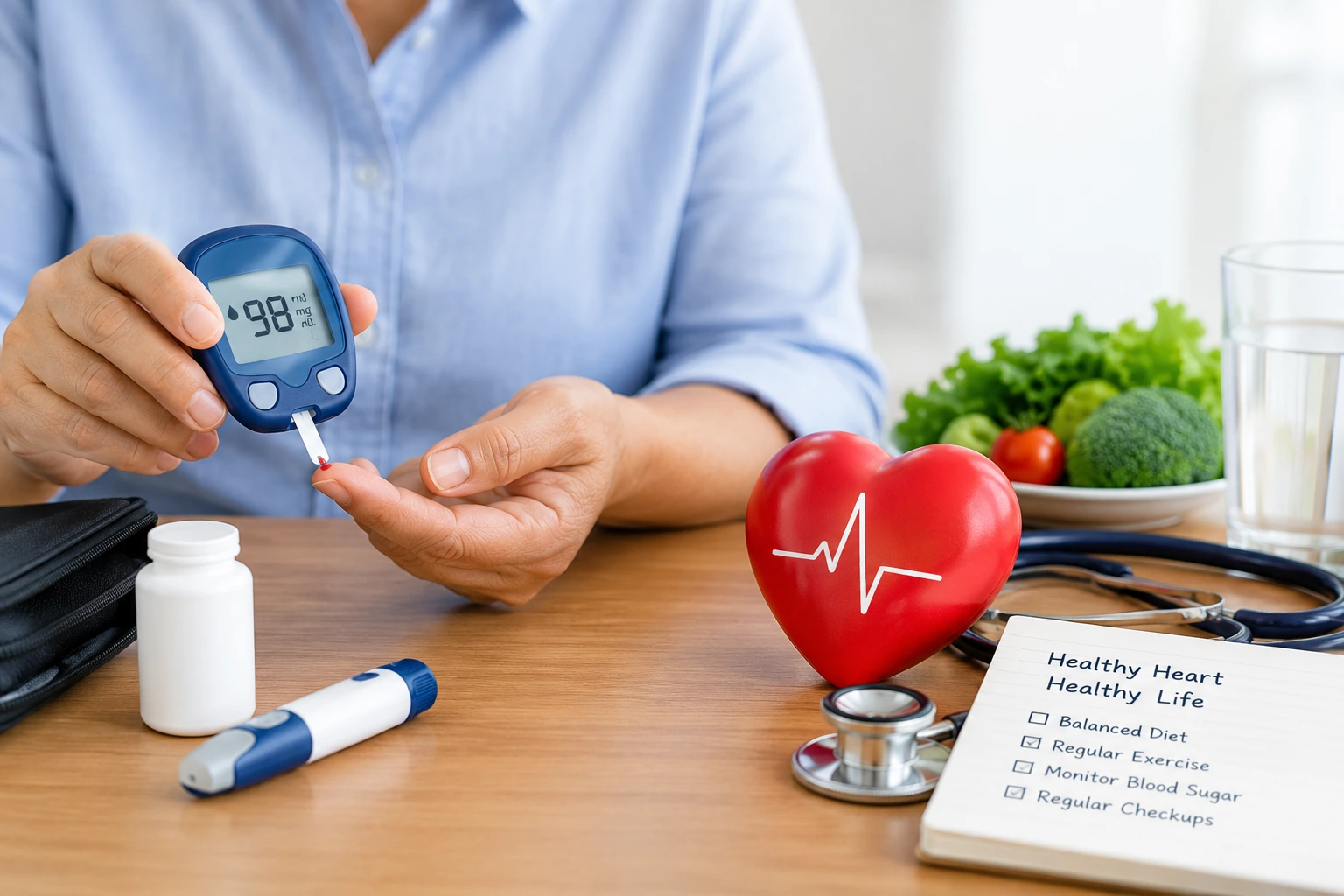
For people with diabetes, cardiovascular risk deserves
particular attention because coronary disease may develop with fewer or less
typical symptoms. Apollo CVHF's Diabetes
and Heart Health resource discusses this relationship in greater detail.
The key message
Heart disease does not always announce itself with dramatic
chest pain. Chest discomfort, breathlessness, unusual fatigue, palpitations,
swelling, dizziness, sweating and gastrointestinal symptoms can all occur in
different cardiovascular conditions—but most of these symptoms also have
non-cardiac causes.
The important question is not simply whether a symptom can
occur with heart disease. It is what the symptom feels like, when it occurs,
what other symptoms accompany it, and what your cardiovascular risk is.
Most importantly, new chest discomfort or
chest-equivalent symptoms accompanied by breathlessness, sweating, nausea,
dizziness or pain spreading to the arm, jaw, neck or back should be treated as
potentially urgent and assessed without delay.
If you have persistent or unexplained cardiac symptoms, or
significant cardiovascular risk factors, a cardiology assessment can help
determine whether further investigation is appropriate.
References
- Gulati
M, Levy PD, Mukherjee D, et al. 2021 AHA/ACC/ASE/CHEST/SAEM/SCCT/SCMR
Guideline for the Evaluation and Diagnosis of Chest Pain. Journal
of the American College of Cardiology. 2021. AHA/ACC
Chest Pain Guideline JACC
- Rao
SV, O'Donoghue ML, Ruel M, et al. 2025 ACC/AHA/ACEP/NAEMSP/SCAI
Guideline for the Management of Patients With Acute Coronary Syndromes.
JACC/Circulation. 2025. 2025
ACC/AHA Acute Coronary Syndromes Guideline American
College of Cardiology
- Heidenreich
PA, Bozkurt B, Aguilar D, et al. 2022 AHA/ACC/HFSA Guideline for the
Management of Heart Failure. Circulation. 2022. 2022
AHA/ACC/HFSA Heart Failure Guideline hfsa.org
Medical review: Dr Kulin Sheth, MD, DrNB Cardiology
Last reviewed: 9th October 2026