

Written by: Dr. Manas Parikh, Interventional Cardiologist, Apollo CVHF Hospitals
Medically reviewed by: Dr. Sameer Dani, Chief Interventional Cardiologist, Apollo CVHF Hospitals
Last medically reviewed: 16 November 2026
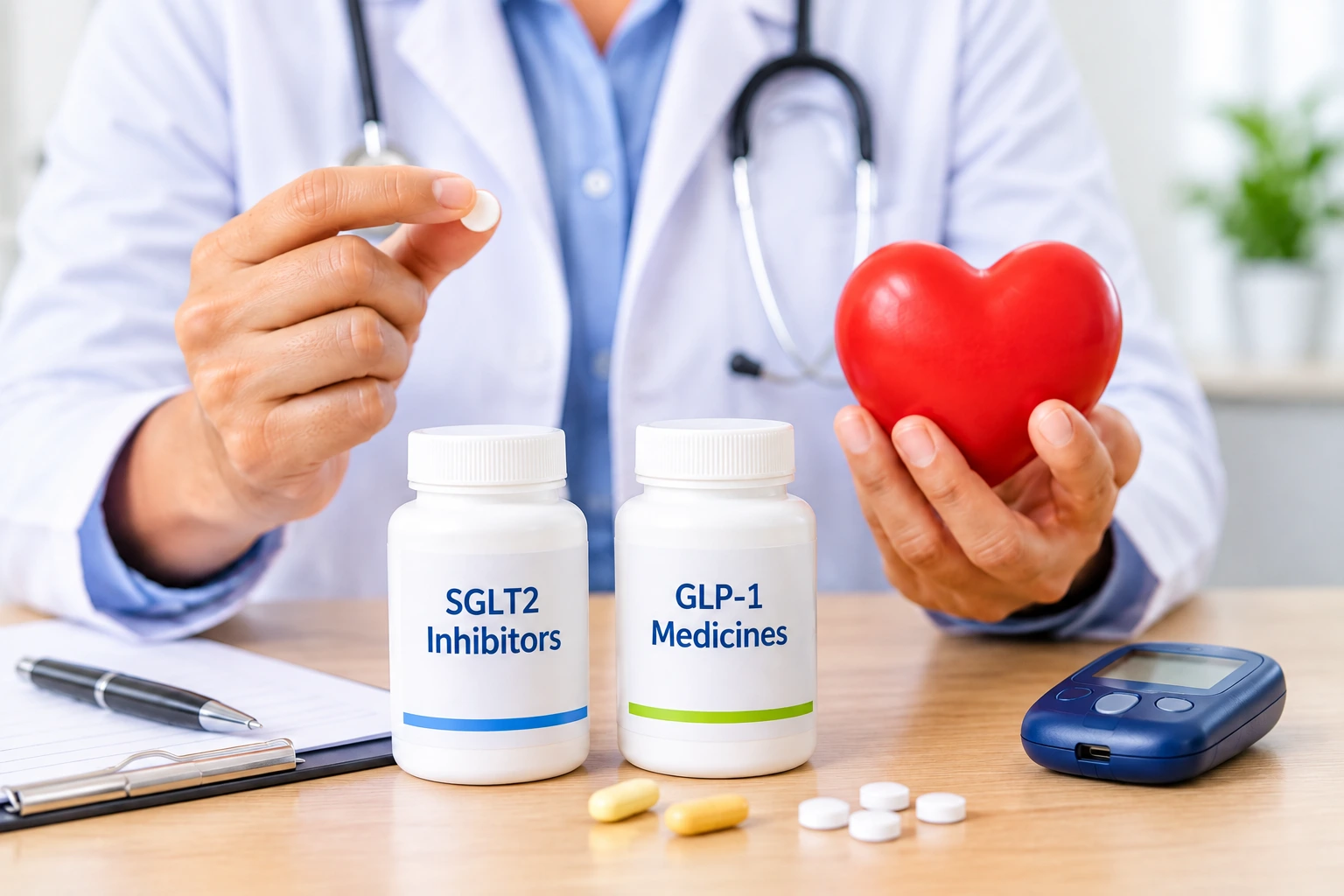
Some medicines used for type 2 diabetes can lower the risk of heart and kidney problems as well as help control blood sugar. Two important groups are SGLT2 inhibitors, such as empagliflozin and dapagliflozin, and GLP-1 receptor agonists, such as semaglutide, liraglutide and dulaglutide.
The benefits are not identical for every medicine. SGLT2 inhibitors are especially useful for many people with heart failure or chronic kidney disease. Certain GLP-1 medicines have been shown to reduce major cardiovascular events, including heart attacks and strokes, in people at risk. Some medicines in both groups may also help protect the kidneys.
You may wonder, “Sugar control mein hai, toh yeh nayi dawai kyun?” Even when your blood sugar is at its target, your doctor may recommend one of these medicines because of your heart or kidney risk.
Why does type 2 diabetes affect the heart and kidneys?
Over time, high blood sugar can damage blood vessels and contribute to fatty deposits in the arteries. Diabetes is also associated with high blood pressure, abnormal cholesterol and other changes that increase the risk of heart and kidney disease.
A person with diabetes can develop coronary artery disease, a heart attack, heart failure or kidney disease. These conditions do not all affect the body in the same way. For example, a heart attack usually happens when blood flow to part of the heart is blocked, while heart failure means the heart is not working as well as the body needs it to.
You can read more about symptoms, tests and treatment in our guide to diabetes and heart disease.
What are SGLT2 inhibitors?
SGLT2 inhibitors are tablets that help the kidneys remove some sugar from the blood through urine. They can also cause a modest fall in blood pressure and body weight.
Examples include empagliflozin, dapagliflozin and canagliflozin. The choice depends on the condition being treated, kidney function and the evidence for the particular medicine.
- In suitable patients, SGLT2 inhibitors can:
- Reduce the chance of being admitted to hospital with heart failure.
- Slow the worsening of chronic kidney disease.
Provide cardiovascular benefits that vary with the medicine and the patient’s underlying risk.
These medicines are also used for certain people with heart failure or chronic kidney disease who do not have diabetes.
“Mane diabetes nathi, toh aa sugar ni goli kem?”
I do not have diabetes, so why have I been given a diabetes tablet?
Your doctor may prescribe an SGLT2 inhibitor because it can help treat heart failure or chronic kidney disease even in some people without diabetes. Ask which benefit your doctor is aiming for and what precautions apply to you.
What are GLP-1 receptor agonists?
GLP-1 receptor agonists are medicines that act like a natural hormone released by the gut. They help the body release insulin when blood sugar is high, slow the movement of food through the stomach and can reduce appetite. Many people also lose weight while taking them.
Examples include semaglutide, liraglutide and dulaglutide. Most medicines in this group are given as an injection, either daily or weekly. Semaglutide is also available as a daily tablet.
Some GLP-1 medicines have been shown to reduce major cardiovascular events in people with type 2 diabetes and established heart disease or increased cardiovascular risk. These events include cardiovascular death, non-fatal heart attack and non-fatal stroke. The evidence varies between medicines, and the results for each individual event are not identical across trials.
Some GLP-1 medicines also have kidney benefits. In selected people with type 2 diabetes, obesity and heart failure with preserved pumping function, certain medicines in this group may help improve heart failure symptoms.
SGLT2 inhibitors and GLP-1 medicines: what is the difference?
The benefits and precautions depend on the specific medicine. Your doctor may recommend one group, or sometimes a medicine from each group, depending on your health and other treatment.
Can these medicines help if my HbA1c is already under control?
Yes. If you have type 2 diabetes and established heart disease, heart failure, kidney disease or certain risk factors, your doctor may recommend a medicine with proven heart or kidney benefit even if your HbA1c is at your individual target.
HbA1c is a blood test that reflects your average blood sugar over approximately the previous three months. It is important, but it is only one part of the decision. Your doctor will also consider your heart, kidneys, weight, other medicines and your ability to take and afford the treatment.
Who should discuss these medicines with their doctor?
- Have had a heart attack, angioplasty with a stent, or bypass surgery.
- Have heart failure or chronic kidney disease.
- Have several risk factors for heart disease, such as high blood pressure and abnormal cholesterol.
- Would benefit from weight management as part of your diabetes care.
What side effects should I know about?
SGLT2 inhibitors
- Ketoacidosis: A rare but serious condition in which acids called ketones build up in the blood. It can happen even when your blood sugar is not very high. Warning signs include nausea, vomiting, abdominal pain, unusual tiredness and difficulty breathing
- Low blood sugar: SGLT2 inhibitors alone rarely cause it, but the risk rises when they are taken with insulin or certain diabetes tablets called sulfonylureas. Your doctor may need to adjust those medicines.
- Serious genital-area infection: This is very rare. Pain, redness or swelling around the genitals or the area between the genitals and the anus, especially with fever or feeling unwell, needs urgent medical attention.
GLP-1 medicines
- Gallbladder problems and pancreatitis: Gallstones or gallbladder inflammation can occur. Pancreatitis is uncommon. Severe or persistent upper abdominal pain needs urgent assessment.
- Diabetic eye disease: Tell your doctor if you have diabetic retinopathy, particularly before starting semaglutide. Continue your recommended eye check-ups.
- Sudden vision changes: Semaglutide has very rarely been associated with a condition affecting the optic nerve. Sudden loss of vision or rapidly worsening eyesight needs urgent eye assessment.
- Thyroid cancer and MEN 2: Tell your doctor if you or a close family member has had medullary thyroid cancer, or if you have multiple endocrine neoplasia type 2, also called MEN 2. Certain GLP-1 medicines should not be used in these situations.
- Pregnancy: GLP-1 medicines should not be used during pregnancy. If you are pregnant or planning a pregnancy, discuss your treatment with your doctor early. Semaglutide is generally stopped at least two months before a planned pregnancy.
What should I do when I am ill?
“Ulti ho rahi hai ya khana nahi kha pa raha hoon. Diabetes ki dawai loon ya nahi?”
I am vomiting or cannot eat. Should I take my diabetes medicine?
If you take an SGLT2 inhibitor and are vomiting, have diarrhoea, or cannot eat and drink normally:
- Pause the SGLT2 inhibitor and contact your treating doctor the same day.
- Do not independently stop your insulin, if you take it. Ask your diabetes team how to manage insulin and blood sugar checks while you are ill.
- Ask whether you need to check for ketones and whether any other medicines need temporary adjustment.
- Restart the SGLT2 inhibitor only when your treating team advises you to do so.
If you have symptoms that could be ketoacidosis, such as vomiting with abdominal pain, unusual tiredness or difficulty breathing, seek urgent medical care even if your blood sugar reading is normal.
If you take a GLP-1 medicine and have severe vomiting or diarrhoea, contact your doctor promptly. Ongoing fluid loss can lead to dehydration and affect kidney function.
Ask for a written sick-day plan when you start treatment, so you know whom to contact and what to do.
Can I fast while taking these medicines?
What should I do before surgery or an endoscopy?
- SGLT2 inhibitors: These are usually paused before planned surgery because surgery and fasting can increase the risk of ketoacidosis. The required timing depends on the medicine and procedure. Ask your team for written instructions.
- GLP-1 medicines: These can slow stomach emptying, which matters when you receive anaesthesia or sedation. Many patients can continue them, but your team may change the plan if you have symptoms or other factors that increase risk.
Are these medicines expensive? Are tablets better than injections?
Do these medicines replace metformin, insulin or heart medicines?
“Dawai se fayda ho raha hai, toh kya baaki goliyan band kar sakta hoon?”
When should I seek urgent help?
- Chest pain, severe or unusual breathlessness, or feel faint.
- Nausea or vomiting with abdominal pain, unusual tiredness or difficulty breathing while taking an SGLT2 inhibitor, even if your sugar reading is normal.
- Severe or persistent upper abdominal pain.
- Pain, redness or swelling around the genitals or between the genitals and the anus, especially with fever or feeling unwell.
- Vomiting or diarrhoea so severe that you cannot keep fluids down.
- Sudden loss of vision or rapidly worsening eyesight while taking semaglutide.
Diabetes and heart care at Apollo CVHF Hospitals, Ahmedabad
References
- American Diabetes Association: Cardiovascular Disease and Risk Management, Standards of Care in Diabetes-2026
- American Diabetes Association: Pharmacologic Approaches to Glycemic Treatment, Standards of Care in Diabetes-2026
- US Food and Drug Administration: SGLT2 inhibitor prescribing information and ketoacidosis precautions
- Multisociety guidance on GLP-1 medicines before surgery
- UK Medicines and Healthcare products Regulatory Agency: Semaglutide and risk of optic nerve damage
- Research Society for the Study of Diabetes in India: Clinical Practice Recommendations for Type 2 Diabetes, 2022