

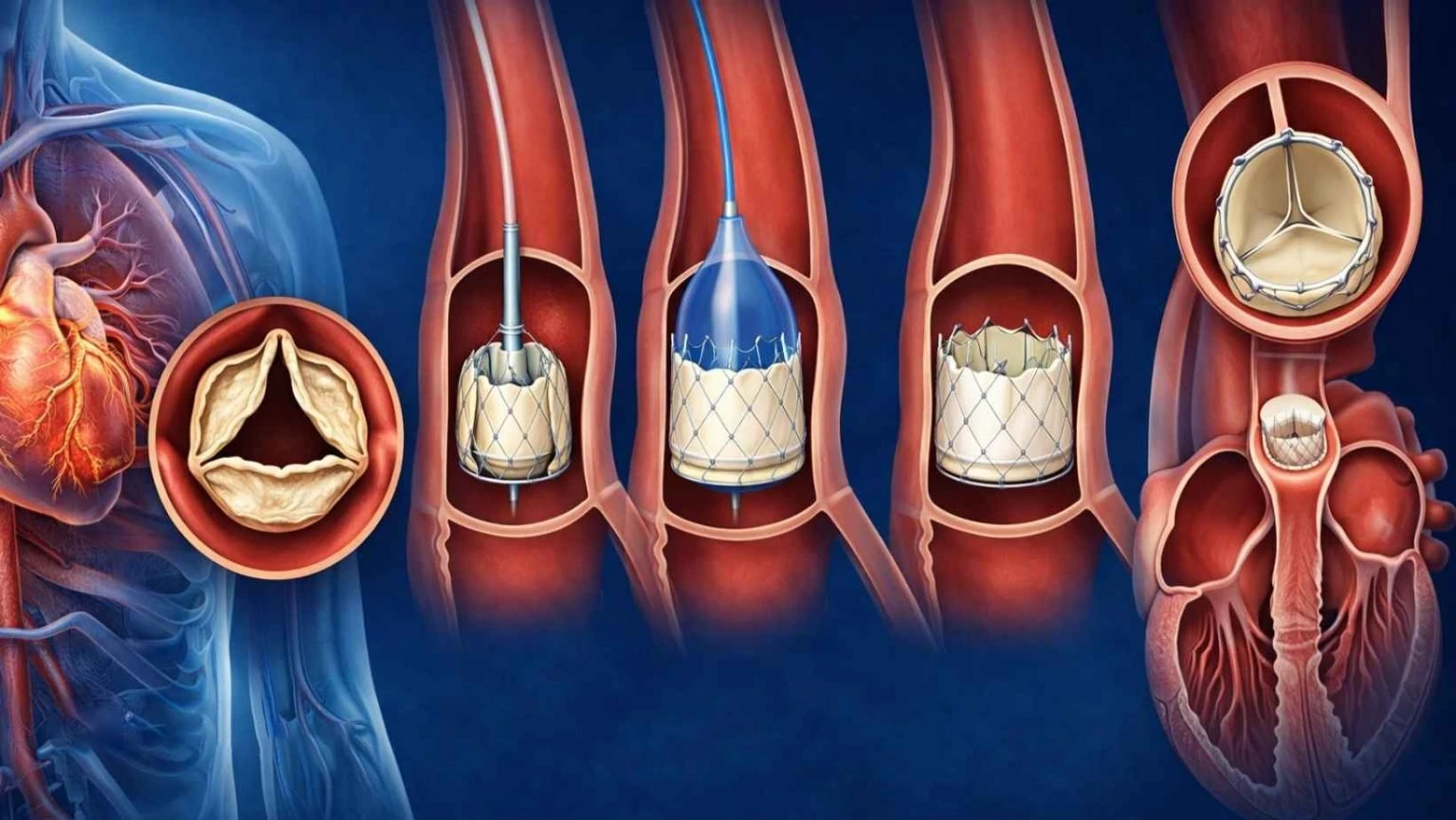
TAVI / TAVR: A Minimally Invasive Aortic Valve Replacement Option
Heart valve disease can affect how efficiently the heart pumps blood and, when significant, can have a major impact on symptoms, daily activities and long-term health. One of the important advances in the treatment of severe aortic stenosis is TAVI, also known as TAVR — a minimally invasive procedure that replaces the diseased aortic valve without conventional open-heart surgery.
For appropriately selected patients, TAVI can provide effective relief from symptoms and improve quality of life. However, it is not automatically the right treatment for every patient with aortic stenosis. The choice between TAVI and surgical aortic valve replacement (SAVR) depends on the patient's age, health, anatomy, surgical risk, life expectancy and other clinical factors, and is best made by a multidisciplinary Heart Team.
What Is TAVI / TAVR?
TAVI stands for Transcatheter Aortic Valve Implantation, while TAVR stands for Transcatheter Aortic Valve Replacement. The two terms refer to the same type of procedure.
TAVI is used primarily to treat severe aortic stenosis, a condition in which the aortic valve becomes narrowed and does not open normally. The heart must then work harder to push blood through the narrowed valve.
During TAVI, a replacement biological valve is mounted on a catheter and guided to the heart, most commonly through an artery in the groin. The new valve is positioned within the diseased native aortic valve and expanded into place, allowing blood to flow more freely from the heart into the aorta.
Unlike conventional surgical valve replacement, TAVI does not require a sternotomy or the same type of open-chest operation used for surgical aortic valve replacement.
Who May Need TAVI / TAVR?
TAVI is considered primarily for patients with severe aortic stenosis who meet criteria for aortic valve replacement.
Whether TAVI or surgical aortic valve replacement is more appropriate depends on several factors, including:
Severity of aortic stenosis and whether the patient has symptoms
Age and expected longevity
Overall health and other medical conditions
Surgical and procedural risk
Anatomy of the aortic valve and surrounding structures
Suitability of the arteries for transfemoral access
Whether other heart conditions require surgical treatment at the same time
The expected durability and lifetime management of the valve
Current guidelines increasingly emphasise individualised decision-making rather than selecting TAVI solely on the basis of surgical risk. The Heart Team plays an important role in determining the most appropriate treatment for each patient.
A patient with severe aortic stenosis should therefore not assume that TAVI is automatically preferable to surgery simply because it is less invasive.
What Symptoms Can Severe Aortic Stenosis Cause?
Aortic stenosis can remain unnoticed for some time. As the valve becomes more severely narrowed, symptoms may develop, particularly during exertion.
Common symptoms include:
Breathlessness, particularly on exertion
Chest discomfort or chest pain
Dizziness or light-headedness
Fainting or near-fainting
Reduced exercise capacity
Unusual tiredness or fatigue
Once significant symptoms develop in severe aortic stenosis, timely assessment is important because the condition can progress and affect heart function.
An echocardiogram is one of the key tests used to assess the aortic valve, heart chambers and pumping function. Additional imaging, including CT, may be required when evaluating a patient for TAVI.
How Is a TAVI / TAVR Procedure Performed?
TAVI is performed in a specialised cardiac catheterisation laboratory or hybrid procedure environment.
Before the Procedure
A detailed assessment is performed before TAVI. This may include:
Echocardiography
CT imaging to assess the aortic valve and vascular anatomy
Electrocardiography
Blood tests
Assessment of kidney function and other medical conditions
Review of medications
Evaluation of coronary arteries when clinically indicated
The CT assessment is particularly important because it helps the Heart Team determine valve size, procedural anatomy and the most appropriate access route.
During the Procedure
In a typical transfemoral TAVI:
A catheter is introduced through an artery, usually in the groin.
The catheter is carefully advanced to the aortic valve.
The replacement valve is positioned within the diseased native valve.
The new valve is deployed.
The replacement valve begins functioning immediately, allowing blood to pass through the new valve.
The catheter is removed and the access site is closed.
The procedure itself may take around one to two hours, although the overall time in the procedure area can be longer depending on the patient's circumstances.
Many patients can undergo TAVI with sedation rather than general anaesthesia, although the anaesthetic approach is determined according to the individual patient and procedural requirements.
What Is Recovery Like After TAVI?
One of the important advantages of transfemoral TAVI is that recovery can be considerably shorter than recovery after conventional open-heart valve surgery.
Many patients are able to get out of bed and begin walking relatively soon after the procedure. Hospital stay varies depending on the patient's age, medical condition, access-site recovery and whether complications or rhythm problems occur.
Some patients may go home within a few days, while others require longer observation.
Symptoms such as breathlessness and reduced exercise tolerance may improve after successful treatment, although the extent and speed of improvement vary between individuals.
Follow-up is important after TAVI to assess the replacement valve, heart function and overall recovery.
What Are the Benefits of TAVI / TAVR?
For appropriately selected patients, TAVI offers several potential advantages:
No conventional sternotomy
Less invasive access compared with surgical valve replacement
Shorter recovery for many patients
Shorter hospitalisation in many cases
Earlier return to everyday activities for many patients
Improvement in symptoms and quality of life when severe aortic stenosis is successfully treated
However, TAVI is still a major cardiac procedure. It carries potential risks, including bleeding or vascular complications, stroke, infection, valve leakage, conduction abnormalities requiring a pacemaker, kidney injury and other complications.
The potential benefits and risks should therefore be discussed individually before treatment.
TAVI or Surgical Aortic Valve Replacement?
TAVI and surgical aortic valve replacement are not competing procedures where one is universally better than the other.
The appropriate choice depends on the individual patient.
In contemporary practice, factors such as age, life expectancy, anatomy, surgical risk, transfemoral access, associated cardiac disease and the need for other cardiac procedures all contribute to the decision. The 2025 ESC/EACTS guidelines, for example, recommend TAVI in patients aged 70 years or older with suitable tricuspid aortic stenosis anatomy, while surgical replacement is generally favoured in younger low-risk patients; patients in between require individualised Heart Team assessment.
For some patients, surgical replacement may offer important advantages — particularly when another cardiac operation is required at the same time. For others, TAVI may provide an effective treatment with a less invasive recovery.
The decision should be based on the patient's lifetime treatment strategy, rather than simply choosing the procedure with the shortest hospital stay.
You can learn more about surgical heart valve repair and replacement and how the structural heart and surgical teams assess treatment options.
What About Coronary Artery Disease?
Patients with aortic stenosis may also have coronary artery disease. The presence of coronary blockages can influence treatment planning and may need to be assessed before or alongside valve intervention.
Coronary angiography and angioplasty may be considered when clinically indicated.
The important point is that TAVI treats the aortic valve. It does not itself treat significant coronary artery blockages or other cardiac conditions.
Why Comprehensive Cardiac Evaluation Matters
Aortic valve disease rarely exists in isolation in older patients. A complete assessment may need to consider:
Coronary artery disease
Heart failure
Abnormal heart rhythms
Kidney function
Blood pressure
Previous cardiac procedures
Other valve abnormalities
Overall functional status and frailty
This is why evaluation for TAVI should extend beyond simply confirming that the aortic valve is narrowed.
A Heart Team assessment can help determine whether TAVI, surgical valve replacement or another approach is most appropriate.
TAVI / TAVR at Apollo CVHF Hospital, Ahmedabad
Apollo CVHF provides evaluation and treatment for patients with structural and valvular heart disease, including TAVI/TAVR.
The TAVI programme involves assessment of the patient's clinical condition, echocardiographic findings, CT anatomy and overall suitability for transcatheter valve replacement. Where necessary, treatment decisions can involve cardiology, interventional cardiology, cardiac surgery, imaging and other specialists.
The aim is not simply to offer a less invasive procedure, but to determine which treatment is safest and most appropriate for the individual patient.
For more information, see the TAVI/TAVR programme at Apollo CVHF Hospital, Ahmedabad.
Frequently Asked Questions
Is TAVI safer than open-heart surgery?
TAVI can offer advantages over surgical aortic valve replacement in appropriately selected patients, particularly because it is less invasive and may allow a faster recovery. However, neither procedure is universally safer for every patient. Age, anatomy, surgical risk, associated conditions and life expectancy all influence the decision.
How long does a TAVI valve last?
Modern transcatheter valves are designed for long-term function, but the durability of a prosthetic valve must be considered in the context of the patient's age and expected lifespan. Long-term durability data continue to evolve, particularly in younger patients.
How long will I stay in hospital after TAVI?
Many patients can be discharged within a few days after an uncomplicated transfemoral TAVI. The actual hospital stay depends on recovery, underlying health, vascular access, heart rhythm and any complications.
Can TAVI be performed in an 80-year-old patient?
Age alone does not determine whether a patient is suitable for TAVI. Older patients are often appropriate candidates, but suitability depends on the severity of aortic stenosis, anatomy, overall health, life expectancy and procedural considerations.
Will I need a pacemaker after TAVI?
Some patients develop conduction abnormalities after TAVI and may require a permanent pacemaker. The risk varies according to the patient's anatomy, baseline conduction system and the type of valve used.
Is TAVI possible if I have already had heart surgery?
Previous cardiac surgery does not automatically rule out TAVI. In some patients, avoiding a repeat open-heart operation may be an important consideration. The Heart Team will assess the individual's anatomy and overall risk.
When Should You Seek Evaluation for Aortic Stenosis?
If you have been diagnosed with severe aortic stenosis, or are experiencing unexplained breathlessness, chest discomfort, dizziness, fainting or a significant reduction in exercise capacity, a cardiology assessment is important.
The appropriate treatment may be TAVI, surgical valve replacement or continued monitoring depending on the severity and clinical circumstances.
Take the Next Step
If you or a family member has been diagnosed with aortic stenosis, the next step is not simply to ask whether TAVI is available. It is to determine whether the valve needs treatment and, if so, which treatment is most appropriate.
A specialist cardiac evaluation can review your echocardiogram, CT scans, symptoms and other medical conditions and explain the available options.
For evaluation and treatment of aortic valve disease, visit Apollo CVHF Hospital, Ahmedabad.