

Medically reviewed by: Dr. Kulin Sheth, MD, DrNB Cardiology, Interventional Cardiologist Last medically reviewed: August 21, 2026 Last updated: August 21, 2026
Coronary artery disease (CAD) occurs when the arteries supplying blood to the heart muscle become narrowed or blocked. When these blockages are too severe for medication or stenting alone, coronary artery bypass grafting (CABG) is used to restore blood flow by routing blood through a healthy vessel taken from another part of the body.
Traditionally, CABG requires a median sternotomy-a vertical incision down the center of the chest to divide the breastbone. However, surgical advances now allow carefully selected patients to undergo minimally invasive bypass surgery. This article explains the different types of minimally invasive bypass, who qualifies, and what patients can expect during recovery.
Understanding the Terminology: MIDCAB vs. Multivessel MICS-CABG
- MIDCAB (Minimally Invasive Direct Coronary Artery Bypass): A single-vessel bypass procedure. It typically involves grafting the left internal mammary artery (LIMA) to the left anterior descending (LAD) artery. It is performed through a small incision between the ribs on the left side of the chest (anterior thoracotomy), usually on a beating heart without a heart-lung machine.
- Multivessel MICS-CABG: An advanced extension of the keyhole approach used to bypass two or more arteries. This is highly technically demanding and is typically offered at specialized centers.
- Hybrid Coronary Revascularization: A combination approach where a MIDCAB surgery (usually for the LAD artery) is paired with percutaneous coronary intervention (stenting) for remaining blockages.
Who Qualifies for Minimally Invasive Bypass?
- Location and number of blockages: MIDCAB is best suited for isolated LAD disease. Multivessel MICS-CABG requires blockages that are accessible from a limited access point.
- Heart pumping function: Left ventricular function must be carefully assessed.
- Chest anatomy: Prior chest surgeries, severe lung disease, or extreme obesity can make minimally invasive access unsafe.
- Vessel health: Extensive calcification in the aorta or coronary arteries may necessitate a traditional approach.
- Surgical risk profile: Overall health, including kidney function and prior strokes, is factored into the decision.
- Patients with extensive multivessel disease or heavily calcified vessels are often better served by a traditional sternotomy, which provides the surgeon with direct access to all coronary territories.
What Happens During the Procedure?
While specific techniques vary, a typical MIDCAB or MICS-CABG procedure involves:- Anesthesia: General anesthesia is administered, often utilizing a technique that allows the lung on the operative side to be temporarily deflated to give the surgeon a clear view.
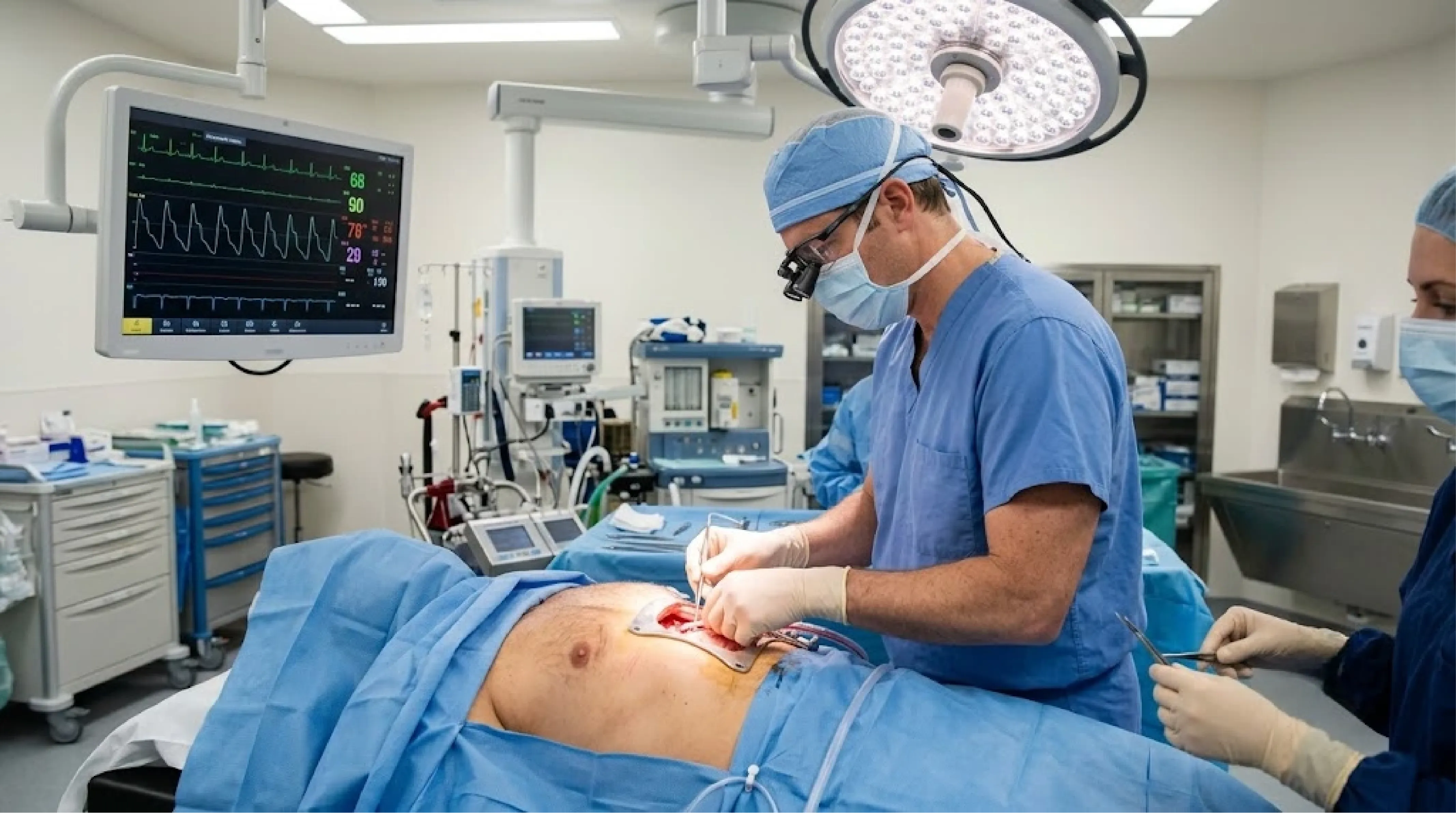
- Incision: A small incision (typically 4–8 cm) is made between the ribs on the left side of the chest.
- Vessel Harvesting: The surgeon harvests the graft vessel, frequently the internal mammary artery, sometimes using specialized endoscopic instruments.
- Bypass Grafting: The bypass is generally performed "off-pump" (on a beating heart) without a heart-lung machine, though this depends on clinical complexity.
- Closure: The incision is closed, leaving the breastbone completely intact.
MICS-CABG vs. Traditional Open Bypass
Neither procedure is universally superior; the correct choice depends on the patient's unique anatomy and disease pattern.
Recovery and Long-Term Care
- Initial monitoring in an intensive care unit before moving to a step-down ward.
- Early mobilization, such as sitting up and walking short distances, within a day or two.
- Participation in a structured cardiac rehabilitation program to optimize long-term outcomes.
Risks and Limitations
- Conversion to Open Surgery: If poor visualization or bleeding occurs, the surgeon may switch to a traditional sternotomy for safety.
- General Surgical Risks: These include infection, bleeding, arrhythmias, and, rarely, stroke or heart attack.
- Suitability: It is not appropriate for all patterns of coronary disease.